Christmas Day Bingo: Rules and 40 Square Ideas
Zé · Published 21 October 2026
Christmas Day bingo is played all day, and nobody calls out numbers. Each player gets a card of things that are bound to happen at some point (a cracker joke gets a groan, someone falls asleep during the King's Speech, more gravy has to be made) and ticks them off as they really happen. The first full line wins. It needs no one to leave the table and keeps running quietly from breakfast to the last turkey sandwich.
Here are the rules, how to make a set of cards in ten minutes, and 40 square ideas to pick from.
The rules of Christmas Day bingo
- Every player gets a card, and every card is different. On a 5 × 5 card, the centre square is free.
- When something on your card really happens, tick it off, quietly.
- No making things happen on purpose. Asking Grandad about his first car just to tick “a story we've all heard” doesn't count, and neither does anything that happened before the cards were handed out.
- A full row, column or diagonal: stand up and shout “Bingo!”. A completely ticked card is a full house.
- A witness for every square: at least one other player must confirm they saw it happen. A disputed square gets unticked.
- The game goes on for everyone else: second line, then the full house for the lucky ones.
Making your bingo cards
- Choose the size. 3 × 3 (nine squares) for children of 5 to 8 or a short lunch, 4 × 4 for an afternoon, 5 × 5 for grown-ups playing the whole day.
- Write one master list of about 40 squares, then pick 24 at random for each 5 × 5 card. Quickest way: list them in a spreadsheet, put =RAND() in the next column, sort by it, take the first 24, then sort again for the next card.
- Mix the odds. Roughly a third of squares that are almost certain, a third that are likely and a third that are rare. Too many easy ones and everybody shouts at once.
- Keep each square under ten words, so nobody spends lunch reading their card.
- Draw it for non-readers: a cracker, a paper crown, a sprout, a sleeping face, a snowman on the telly.
- Print one card per player and hand out pencils. The back of a cereal box makes a fine clipboard.
40 square ideas, from breakfast to Boxing Day
Pick the ones that fit your family and add the little habits everyone will recognise. The best squares make the whole table laugh when they happen, not one person blush.
Morning and presents
- Someone is still in pyjamas at 11am
- A present needs batteries nobody has
- Nobody can find the end of the Sellotape
- A gift tag has the wrong name on it
- A child plays with the box more than the toy
- Someone puts on their new slippers straight away
- A present has to be explained to the person who opened it
- Someone says “It's just what I wanted” a bit too quickly
Arrivals and the kitchen
- Someone has to go back to the car for a forgotten present
- Someone tells a teenager “Haven't you grown!”
- A Christmas jumper lights up or plays a tune
- Someone has to move their car to let another one out
- The smoke alarm goes off
- Someone is told to get out of the kitchen
- A debate about cutting crosses in sprouts
- More gravy has to be made
At the table
- A cracker doesn't snap and needs a second pull
- A cracker joke gets a groan from the whole table
- Someone's paper crown tears or slips over one eye
- Someone eats a sprout and pulls a face
- A pig in blanket goes missing from someone's plate
- Someone reads their fortune from a cracker fish
- Someone undoes a button or loosens their belt
- The brandy on the pudding won't light
The King's Speech and the telly
- Someone shushes the room for the King's Speech
- Someone is asleep before the end of the King's Speech
- An argument about which film to watch
- Someone says “I've seen this one” and watches it anyway
- The remote control goes missing
- Someone reads the board game rules out loud
- A new gadget won't work until it's been charged
- Someone suggests a walk “to let dinner go down”
Evening and Boxing Day
- Turkey sandwiches appear before 8pm
- The cheeseboard comes out although nobody is hungry
- Only the least favourite chocolates are left in the tin
- A dish is found in the microwave, forgotten since lunch
- Someone starts a jigsaw that won't be finished before New Year
- Someone says “Same time next year?”
- The Boxing Day walk gets planned
- Someone finds wrapping paper stuck to their sock
When to start and how to pick the winner
Hand the cards out at breakfast if you're all under one roof, or when the last guests arrive: from then on the game runs by itself. If two players shout within seconds of each other, both win: it's Christmas. Over a long day, plan three prizes: one for the first line, one for the second, and one for a full house, if anyone gets there.
Prizes can be tiny: a chocolate coin, first pick from the tin, choosing the evening film, being let off the washing-up or wearing the best paper crown until bedtime. Keep the ticked cards in a drawer: read again next year, they settle who really told the same story three times.
Versions for children and for grown-ups
- Children of 4 to 7: 3 × 3 picture cards with things they can see (someone wearing a paper crown, a robin on a card, snow on the telly, a present with a bow). Pair each little one with an older cousin who can read.
- Grown-ups only: squares about the family's habits (“Uncle Phil mentions the M25”), as long as everyone named would laugh about it too.
- Guests you don't know well: stick to neutral squares about the food, the weather, the telly and the crackers.
- Family far away: each household plays with its own cards and you compare on a video call in the evening. Both sides need a witness at home.
Mistakes that spoil the game
- Identical cards: everyone shouts bingo at the same moment.
- Squares that are easy to provoke, such as “someone says reindeer”: the game turns into a contest to make people say things.
- Squares that tease one person or touch a sore subject: the game is there to ease the day, not to start a row.
- Too many squares for small children: a 5 × 5 card is too much for a six-year-old. Nine squares, with pictures, is plenty.
Ready-made bingo cards
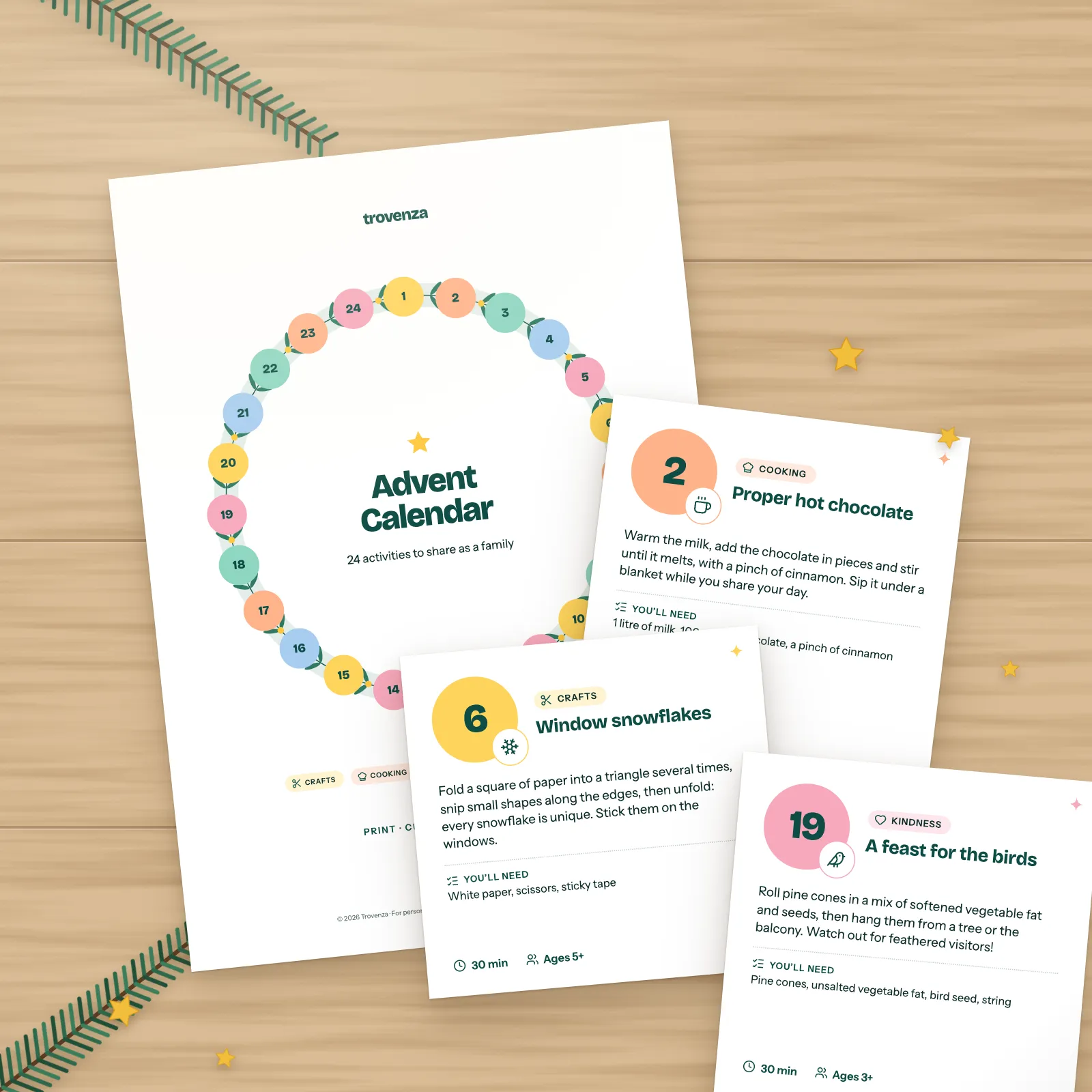
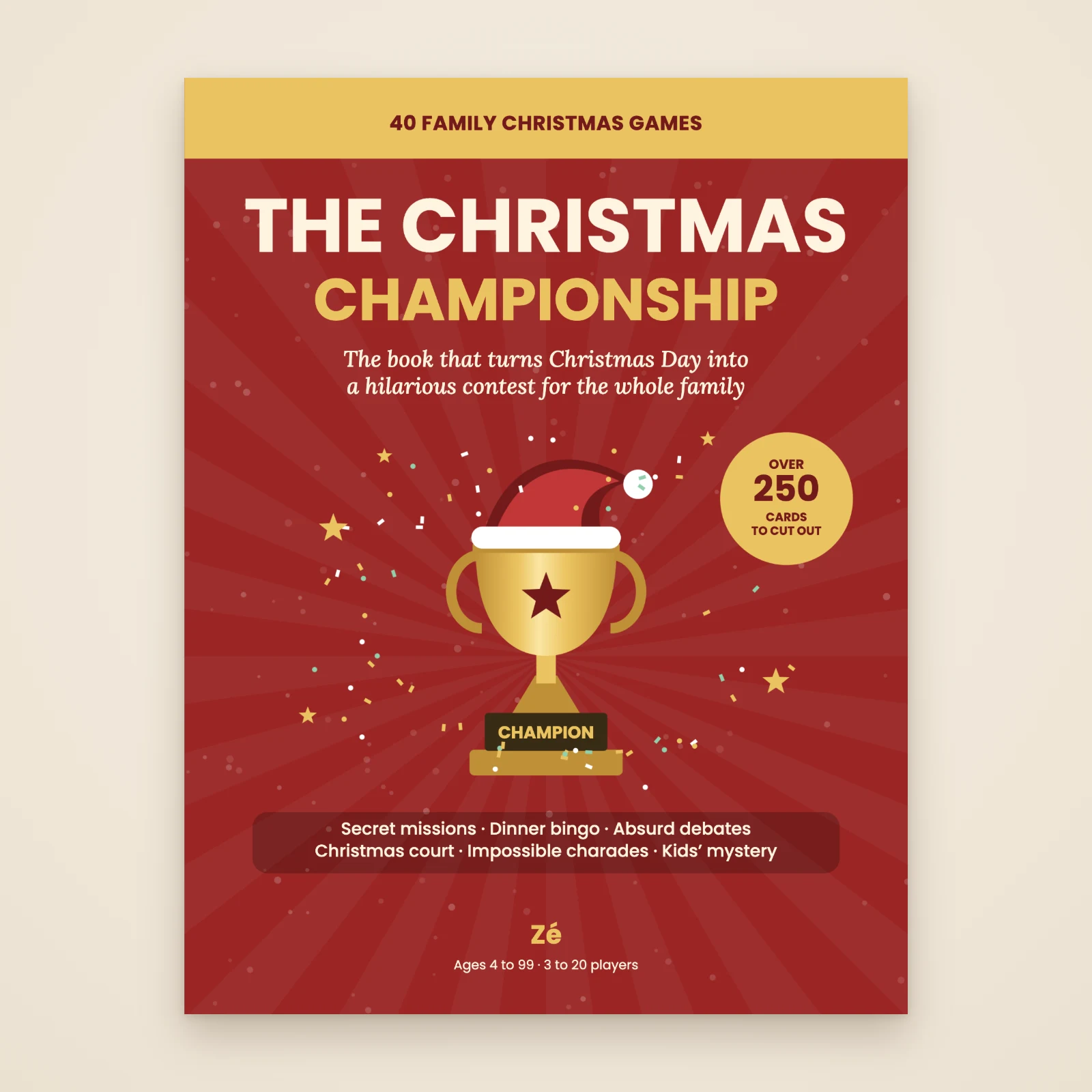
Christmas Day bingo is one of the games that run all day in The Christmas Championship, our printable book of 40 games for Christmas Day. Its Christmas Dinner Bingo comes with 12 cards, all different, for 3 to 12 players aged 8 and up, scoring 4 points for the first bingo, 2 for the second and 6 for a full card, all added to a Championship score sheet that runs until pudding. The 167-page PDF also has over 250 cards to cut out for 3 to 20 players from age 4, and prints in black and white on A4 with “Fit to page”. It sits with our other printable Christmas activities, including the family Advent calendar for the 24 days before.
12 bingo cards ready to cut out
Frequently asked questions
What do you put on a Christmas bingo card?
Things that really happen on the day and that everyone can see: a cracker joke gets a groan, the smoke alarm goes off, someone falls asleep during the King's Speech, more gravy has to be made. Mix certain, likely and rare squares.
How many squares should a Christmas bingo card have?
Nine (3 × 3) for children or a short lunch, sixteen (4 × 4) for an afternoon, and twenty-five (5 × 5, centre square free) for grown-ups playing all day. Make every card different.
Can you play Christmas bingo over Zoom or at work?
Yes. Over a video call, each household plays its own cards and compares at the end. For a work Christmas lunch, write squares about the party itself (a Secret Santa gift that needs explaining, someone talks about work), and keep them kind.
What are good prizes for Christmas bingo?
Small ones: a chocolate coin, first pick from the tin, choosing the film, a night off the washing-up or the best paper crown. The fun is in the ticking, not the prize.