Football Gifts for Kids: 20 Ideas by Age, 5 to 17
Zé · Published 21 October 2026
The best football gifts for kids do one of three things: get them playing, go with their season at the club, or feed what they love about the game. A ball in the right size for their age group, something to practise with in the garden, a journal for their matches, a good book or a trip to a ground all fit. Start from where and how the child plays (club, garden, playground, favourite position), then pick by age.
Below are 20 ideas from 5 to 17, most of them modest in price, plus stocking fillers, a thank-you for the volunteer coach and the presents that tend to disappoint.
Questions to ask before you buy
- Do they play for a club? Many clubs have their own kit, ordered through the club, and the coach can tell you which ball size the team trains with. A quick message to the coach or another parent saves a wasted present.
- Where do they play at home? A garden, a yard, the park round the corner or a flat with neighbours below: a pop-up goal only makes sense if there is room to shoot without hitting the greenhouse.
- Who do they follow? A men's or women's team, a player, the England squads: that is the starting point for shirts, books, posters and tickets.
- What size are their feet this month? Boots need trying on, for the size and for the sole (firm ground, artificial grass, indoor). A shop trip together, or a voucher, beats a surprise box.
- Do they like reading, writing or drawing? A football book or a journal can please as much as a piece of kit, especially for a child who already talks you through every match on the drive home.
The right ball for their age group
A ball is still the most useful present, as long as it is the right size. In England, ball size follows the match format of each age group. England Football's FutureFit guidance for grassroots football sets it out like this:
- Size 3: Under 7 to Under 11 (Year 2 to Year 6), for 3v3, 5v5 and 7v7.
- Size 4: Under 12 and Under 13 (Years 7 and 8), where 9v9 is the maximum format.
- Size 5: from Under 14 (Year 9), for 11v11.
Leagues and clubs can have their own rules, so check with the coach. Then match the ball to where it will be used: a hard-wearing ball for the playground or the street, a regular training ball for grass, a low-bounce futsal ball for a sports hall, and a soft foam ball for indoors. Add a small pump with a spare needle: a flat ball at the back of the cupboard helps nobody. Coaches in the US call it soccer and their leagues set their own ball sizes by age, so check yours.
For 5 to 7-year-olds
- Their own size 3 ball, light enough to kick all afternoon, with their name written on it in permanent marker.
- A pop-up goal for the garden, with the pegs that hold it down. Two small ones make a proper match.
- A bag of flat markers and a few mini cones. They will build their own dribbling courses, and you will be asked to time them.
- The shirt of their favourite team in a children's size. Check the size chart before you order.
- A football picture book or sticker album, for the quiet half-hour before bed.
For 8 to 10-year-olds
- A rebounder, the net frame that sends the ball back, for passing and first touch on their own.
- A better size 3 ball: at U9 to U11 they still play with a size 3, so a match-quality one is a real step up.
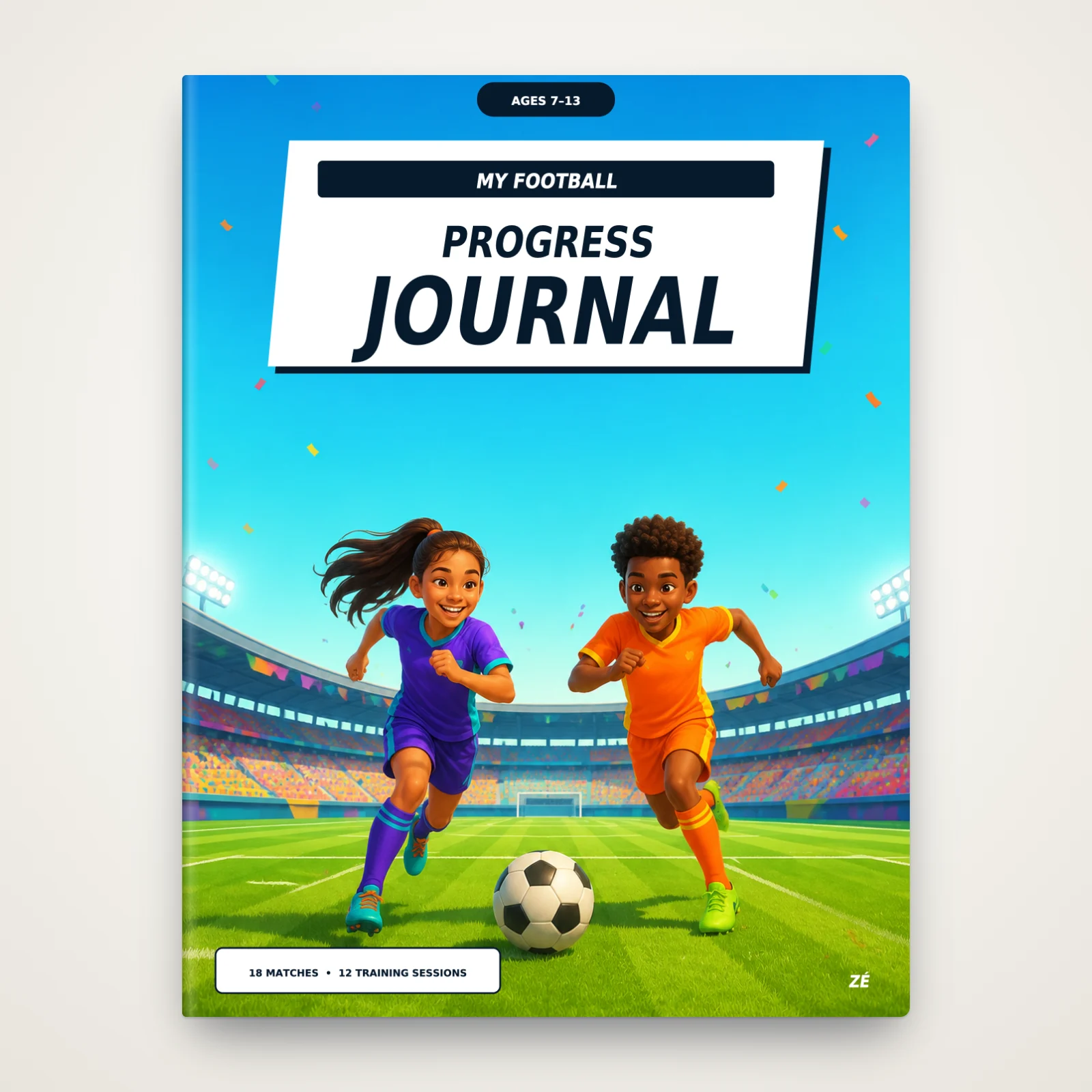
- A football journal. Our kids' football journal for ages 7 to 13 is a 100-page PDF you print at home: a “Before kick-off” page with a target and a pitch to mark their position, then their numbers, how they felt and what they learnt after each of 18 matches, plus 12 training sessions and 8 skills rated at the start and the end of the season.
- Goalkeeper gloves in a junior size, if they enjoy their turns in goal.
- A football board game or quiz book, to play as a family when it rains.
For 11 to 13-year-olds
- A size 4 ball once they reach Year 7, when 9v9 starts.
- A trip to a match. A local non-league or women's game puts them close to the pitch and is often easier to get into than a big fixture.
- A kit bag with their name on it, with a water bottle and a separate boot bag for the muddy pair.
- An agility ladder and a few cones, to set up in the garden or the park.
- A football book that suits the reader: a player's life story, a novel, a graphic novel or a book of facts and records.
For 14 to 17-year-olds
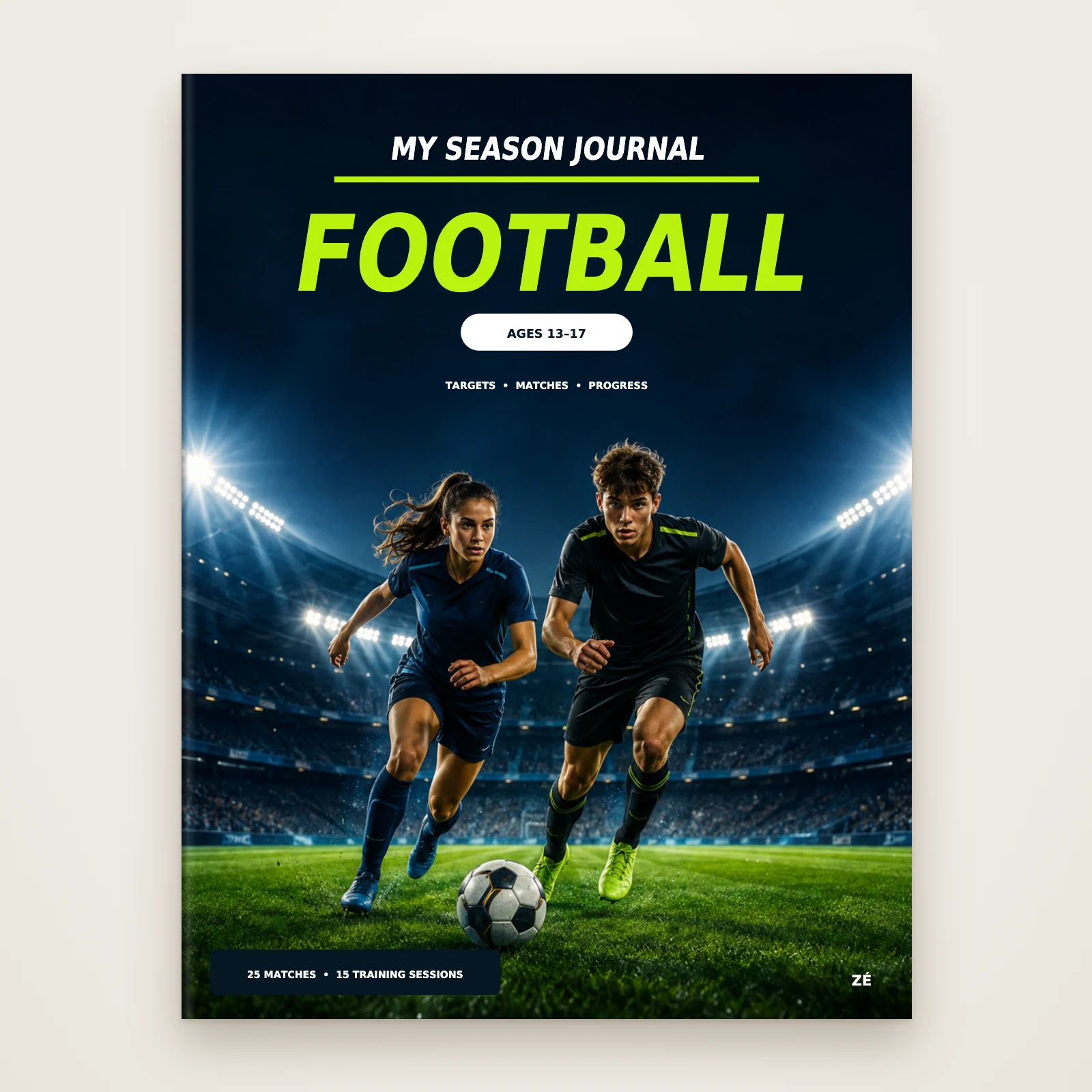
- A season journal. Our football season journal for ages 13 to 17 asks for a game plan and a tactical job before each of 25 matches, then minutes played, goals, assists, duels won and ratings from 1 to 10 afterwards, with a box for goalkeeper saves. 15 training pages and an end-of-season review in 6 areas, with room for the coach's view, complete it.
- A good size 5 ball for kickabouts with friends.
- Tickets to a big match, to go with a parent, a grandparent or a mate.
- A book on tactics, if they already talk about pressing, overloads and low blocks.
- The everyday kit that wears out: match socks, an insulated bottle, a warm coat for the touchline, a proper boot bag.
Gifts to share
Some of the best presents can't be wrapped. A child who loves football often remembers a moment more than one more object:
- A family kick-about in the park on Boxing Day, cousins included and Grandad in goal.
- Watching a big match together, and letting them explain the tactics to you.
- A stadium tour: many professional clubs run them, and some include the dressing room and the tunnel.
- A mini tournament for their birthday: bibs, cardboard medals, orange squash and cake at half-time.
Football stocking fillers
- A packet of football stickers or trading cards.
- A mini ball or a soft foam ball for the hallway (move the lamp first).
- A ball pump with spare needles.
- Socks or a hat in their club's colours.
- A keyring or a badge of their team.
- A pocket quiz book of football facts.
- A handwritten voucher: “one Saturday morning kick-about with me”.
And for the volunteer coach?
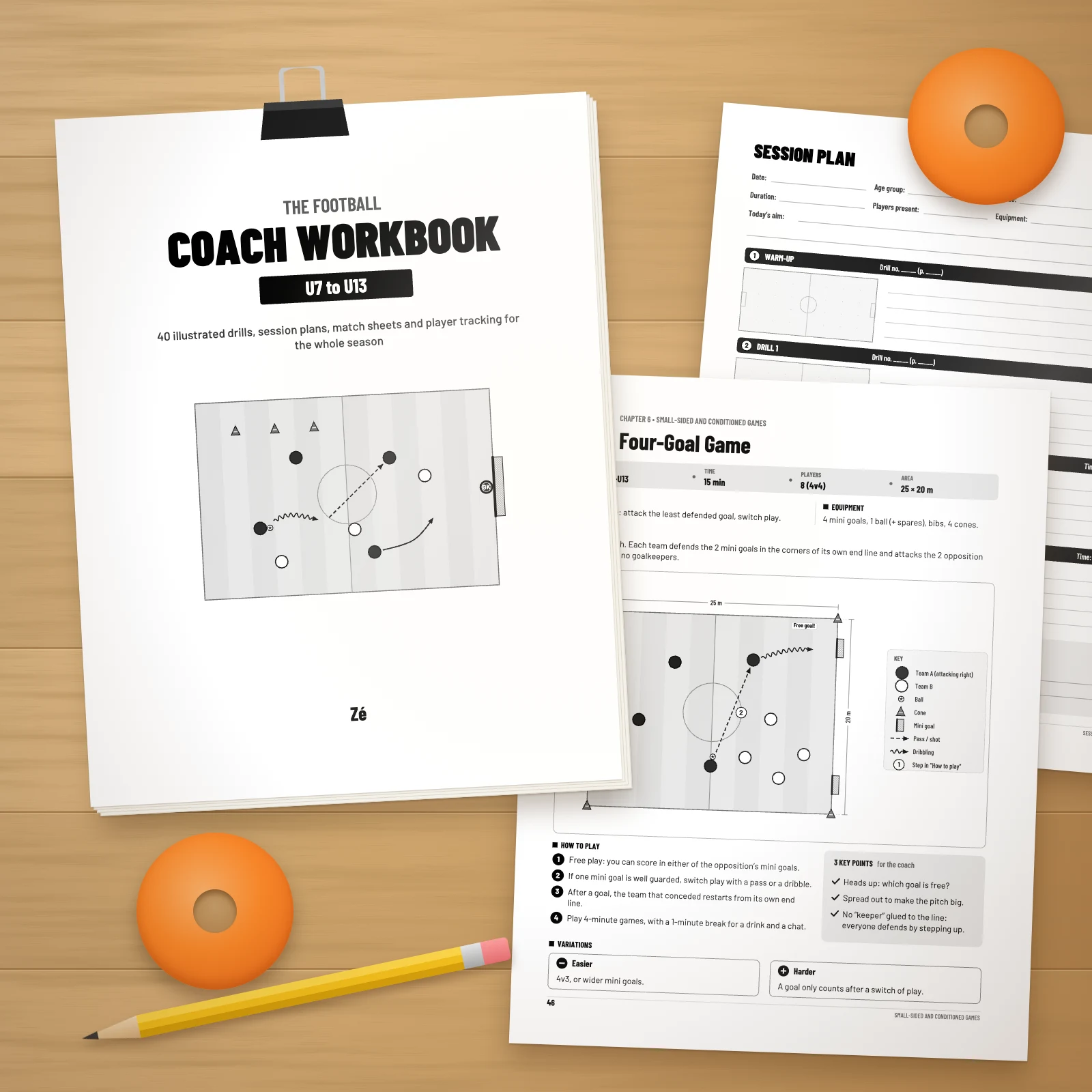
At the end of the season, many families club together to thank the coach, who is usually a volunteer giving up evenings and weekends. A card signed by every child, a framed team photo or something useful on the touchline (a flask, a stopwatch, a mesh ball bag, a clipboard) always goes down well. If they plan sessions at the kitchen table, our football coach workbook U7 to U13 has 40 illustrated drills, 30 session plans and 20 match sheets for line-ups, subs and minutes played. It is an independent workbook, not an FA resource.
Gifts to avoid
- Boots bought without trying them on: the wrong size or the wrong sole for their pitch, and they sit in the box.
- A ball of the wrong size: too big and too heavy for a six-year-old, it soon puts them off.
- Gadgets that promise to turn them into a pro: they disappoint the child as quickly as the parent.
- The rival team's shirt, as a joke: the joke is rarely funny to the person wearing it.
Both journals are written for boys and girls and download straight after payment. You will find them in our football journals for young players, and our guide to personal goals for football players shows how to set the first targets together.
Two journals to give
Frequently asked questions
What do you get a child who loves football?
Start with what they will use every week: a ball in the right size for their age group, a garden goal or a rebounder, then something that feeds the passion, such as a journal for their matches, a book or a trip to a game.
What are good football gifts for girls?
The same ideas work: the right ball, a garden goal, goalkeeper gloves, a journal. Add the shirt of a women's team or player she follows, or tickets to a women's match, which are often easy to get.
What are good football stocking fillers on a budget?
Stickers or trading cards, a foam ball, a pump with spare needles, socks in club colours, a team keyring, a quiz book, or a handwritten voucher for a kick-about together.
Is a football journal a good present?
For a child who likes to talk about their matches, yes. Before each game they set a target, afterwards they write down their numbers, how they felt and what they learnt, and at the end of the season they have a record to keep. Our journals are printed at home, so extra match pages can be printed when needed.